Sports bring multiple benefits to the development and education of children, fostering physical health, emotional wellbeing, teamwork, discipline, and social inclusion. At the same time, sports environments can also expose children to specific risks of violence and abuse. The risks of violence and abuse in sports are often exacerbated by unequal power dynamics, the authority of coaches and referees, intense competition, time spent in remote training centers, frequent physical contact, and separation from home or school.
This highlights the need for accessible safeguarding systems and improved coordination between child protection actors and sports professionals to strengthen prevention and response mechanisms against violence and abuse in sports and recreational settings.
Key expected results
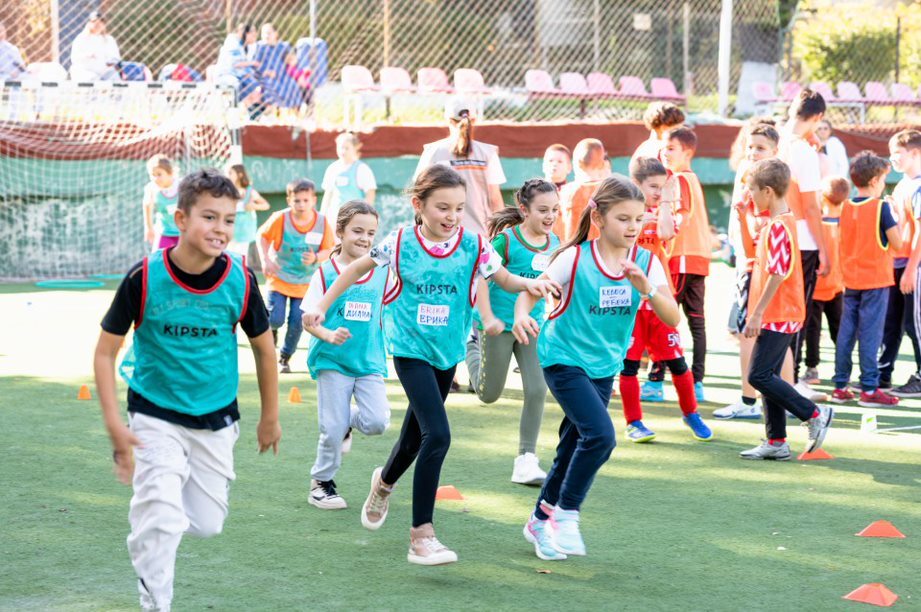
Keeping Children Safe in Sports 2.0 (KCSS2.0) project aims to increase and strengthen multidisciplinary cooperation between child protection actors and sports professionals in contact with children, to better safeguard and respond to violence and abuse against children in sports and recreational settings.
To achieve this, the project will:
- develop and adopt child safeguarding policies in sports settings in Greece, Romania, Kosovo, Albania;
- build the capacity of professionals in sports and child protection on prevention, early identification, and survivor-centered response to incidents of child safeguarding;
- empower children and raise their awareness on their rights and forms of abuse in sports through information and participatory sessions;
- develop a standard operational procedure on child-friendly referral pathway to safeguarding cases;
develop tools to enable multiplication of results and sustainability; promote sharing of good practices and mutual learning between stakeholders in project countries.
For more information, please contact: George Kanaris, Child Protection Programs Coordinator at [email protected]
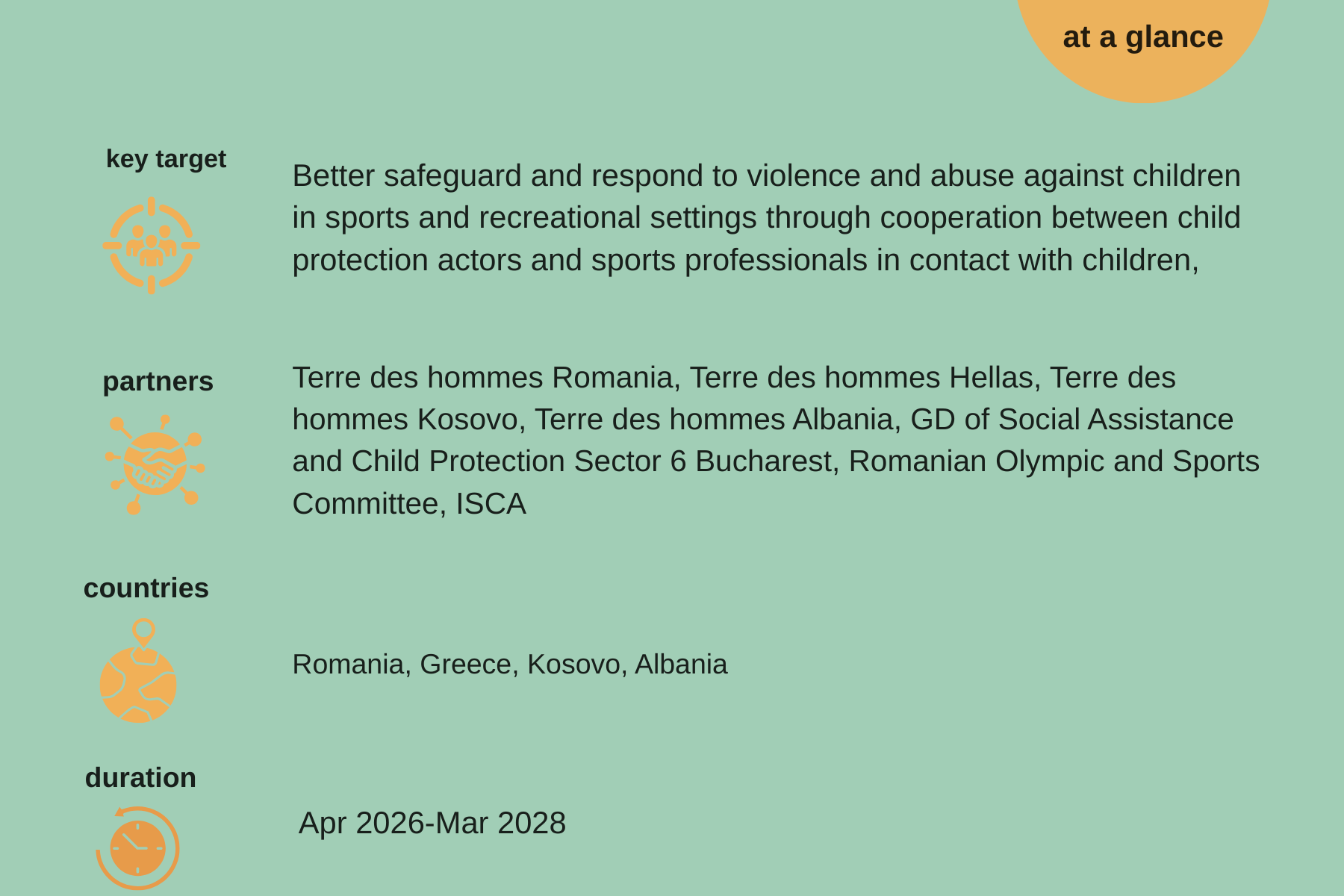
The “KCSS 2.0 – Keeping Children Safe in Sports 2.0” project is co-funded by the European Union, coordinated by Terre des hommes Romania, and implemented in partnership with Terre des hommes Hellas, Terre des hommes Kosovo, Terre des hommes Albania and the General Directorate of Social Assistance and Child Protection Sector 6 Bucharest (DGASPC), with the Romanian Olympic and Sports Committee and International Sport and Culture Association (ISCA) as associated partners, under the CERV-2025-DAPHNE Programme.